


A jazz piano practice routine that actually builds skill

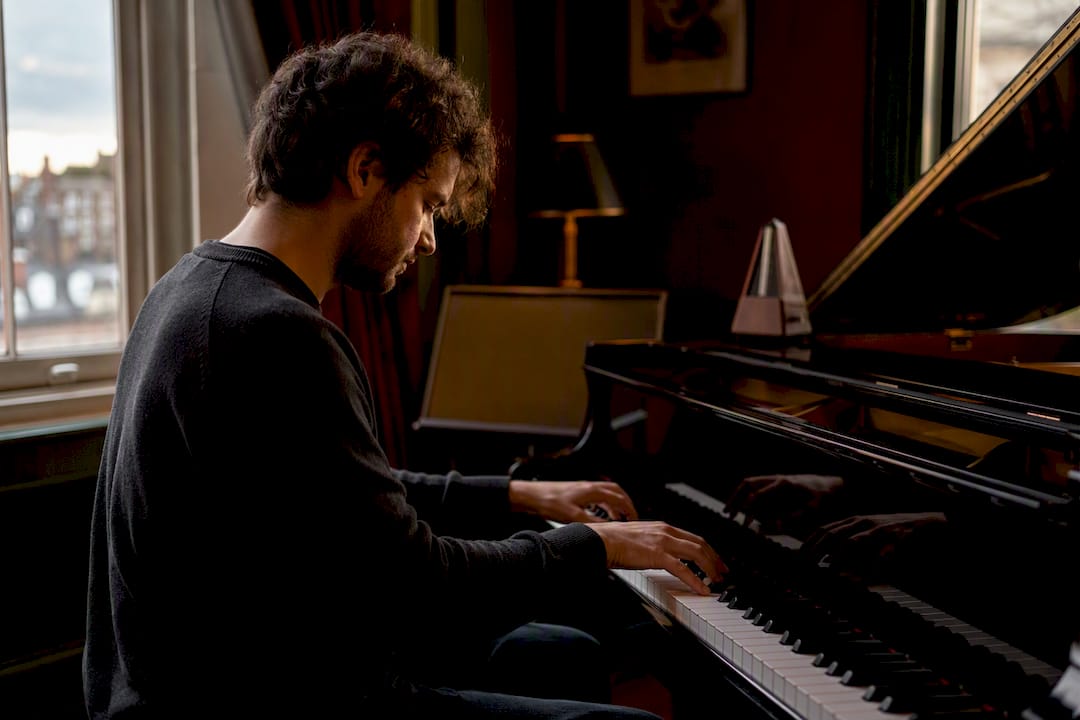
A solid jazz piano practice routine runs on five blocks: warm-up, technique, repertoire and section work, improvisation and ear training, and a final review with some free play. In a 30-minute session, split it roughly 5/5/10/5/5. Stretch sessions to 45 minutes with each block growing proportionally, giving more time on repertoire. For a 90-minute session, add proper transcription work and slower, deeper technical drilling. This structure comes straight from method books like Mel Bay’s Jazz Studies for Piano. It’s the same skeleton Dan Piano Studio uses with students in Central London and online.
Warm-up (5 min): hand-independent scales, simple hand-over-hand arpeggios
Technique (5 min): ii–V–I drills, voicing work
Repertoire/section work (10 min): isolate the hard bars of one standard
Improvisation/ear training (5 min): solo over a backing track or transcribe by ear
Review/creative play (5 min): record a take, listen back, noodle freely
TL;DR:
Consistent practice should focus on rotating blocks of warm-up, technique, repertoire, improvisation, and review, with weekly emphasis shifts across days.
Practicing ii–V–I progressions in all 12 keys and across the cycle of fourths builds harmonic fluency essential for jazz standards.
Beginner players benefit from shorter, frequent sessions, while advanced players should aim for 90 minutes or more to cover technical, repertoire, and improvisation skills thoroughly.
Fix difficult passages by isolating bars, slowing down, and gradually rebuilding with a metronome, rather than rushing through full-speed repetitions.
Regularly recording and analyzing practice allows for identifying timing issues and tracking progress, especially in addressing weak spots or technical challenges.
Table of Contents
Building a daily and weekly jazz piano practice schedule
A practice schedule only works if each block has a job. Vague time at the keyboard rarely turns into progress. A structured schedule with predefined ratios between technical work and repertoire consistently outperforms unstructured noodling, because you’re never guessing what to do when you sit down.
Here’s what each block should actually contain:
Warm-up. Hanon-style finger patterns are fine, but jazz players get more out of major and minor scales in swung eighth notes, plus simple triad arpeggios moving up by semitone. Two minutes of this wakes up the hands without draining focus.
Technique. This is where ii–V–I progressions, voicing drills, and left-hand comping patterns live. Keep a rotating list so you’re not doing the exact same exercise every day.
Repertoire and section work. Pick one standard per week as your focus tune. Spend this block on the hardest four bars, not playing the whole thing top to bottom.
Improvisation and ear training. Solo over the chord changes of your focus tune, or spend five minutes transcribing a phrase from a recording by ear.
Review and creative play. Record a short take, listen back critically, then let yourself play freely with no goal. This last bit matters more than most players think.
30-minute session: 5 warm-up / 5 technique / 10 repertoire / 5 improvisation / 5 review.
45-minute session: 5 warm-up / 10 technique / 15 repertoire / 10 improvisation / 5 review.
90-minute session: 10 warm-up / 20 technique / 30 repertoire and transcription / 20 improvisation / 10 review, with a short break around the halfway mark.
Over a week, don’t repeat the identical session seven times. Rotate emphasis across days: two days weighted towards ear training and transcription, two days weighted towards repertoire maintenance across multiple tunes rather than just your current focus piece, and one day given over almost entirely to improvisation and free play. A scheduled weekly plan with allocated focus areas stops any one skill getting neglected, which is exactly what happens when players default to whatever feels easiest that day.
On timing: morning practice tends to suit technical drilling, since your mind is fresh and less prone to sloppy habits creeping in. Evening sessions work better for improvisation and creative play, when you’ve had a full day of musical input to draw on. Neither is compulsory. What matters far more is picking a slot you can actually protect most days, because a scheduled weekly plan beats an occasional heroic three-hour session every time.
What core exercises belong in a jazz piano routine?
Four exercise families do most of the heavy lifting: ii–V–I progressions, voicings, comping patterns, and scale/arpeggio drills. Rotate through them deliberately rather than picking whichever feels comfortable.
ii–V–I in all 12 keys. This is the backbone of jazz harmony, and practising it across every key matters because standards modulate constantly and flat keys (F, Bb, Eb, Ab) turn up far more often than sharp ones in the real repertoire. Rotate practice through the cycle of fourths rather than chromatically. Alternate the voicing family you use each day: shell voicings (root and 7th, or 3rd and 7th) on Monday, rootless voicings on Tuesday, upper-structure triads on Wednesday. Finish each run with 30 seconds of improvised soloing using only that day’s voicing family, which forces the harmony into your ears rather than just your fingers.
Voicings and voice-leading. Practise moving from one chord voicing to the next with minimal hand movement. If your Dm7 voicing has the 7th on top, your G7 voicing should keep that note close by or resolve it down a step. This is what separates smooth comping from clunky, disconnected chord-stabbing. Working through voicings for ii–V–I in context, rather than in isolation, builds this instinct faster than any chord chart alone.
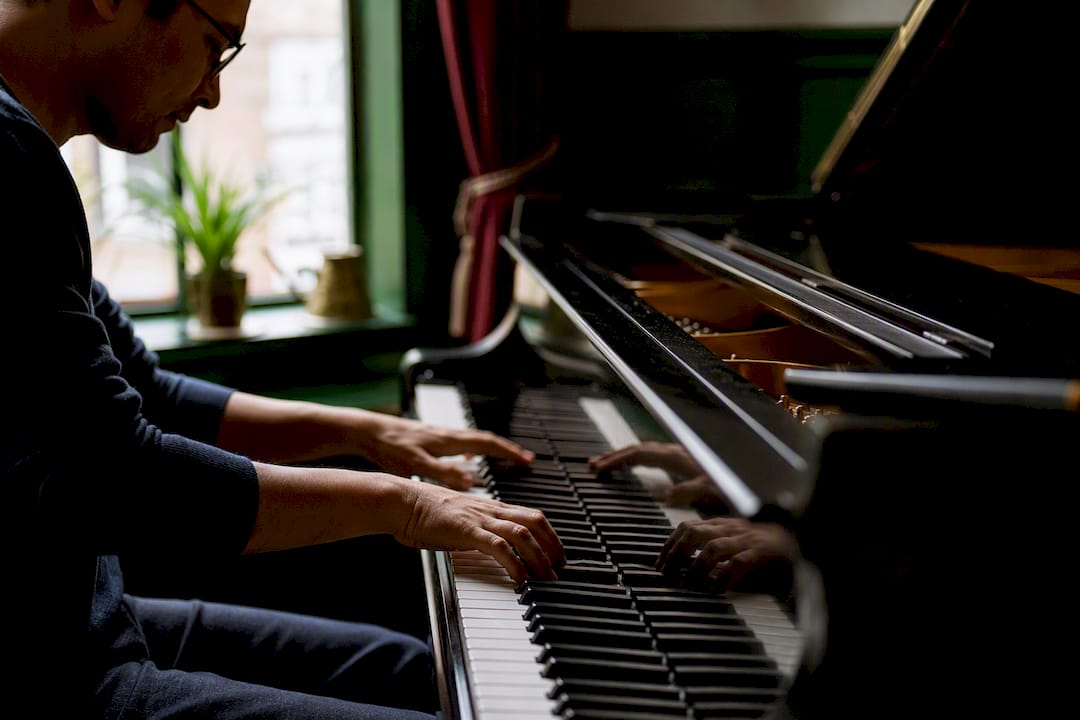
Comping patterns. Left-hand rhythm is where a lot of intermediate players plateau. Practise syncopated comping (anticipating beat 1 by an eighth note), rootless voicings against a walking bass line if you’re working with a bassist or backing track, and a stride-influenced hybrid where you occasionally drop a root note on beat 1 for weight. Comping patterns and playable rhythms are worth drilling slowly before adding tempo.
Scales and arpeggios. Bebop scales, modes of the major and melodic minor scales, and arpeggios built on 7th chords all deserve slots, but keep this musical rather than mechanical. Prioritising applied exercises over generic drills means playing a scale as a line over a chord change, not just up and down in isolation.
For tempo progression, use a simple rule: once you play a passage cleanly three times in a row at a given tempo, increase the metronome by 4 to 8 BPM and repeat. This stops you rushing ahead on shaky foundations.
Pro Tip: Keep a running log of which voicing family and which key you practised each day. After two weeks, you’ll spot exactly which keys you’ve been quietly avoiding, usually the ones with more flats.
Rotating through all 12 keys isn’t a nice-to-have extra. It’s the difference between a player who can only comp fluently in C and F, and one who can sit in on any tune called at a session without freezing.
Level-based routines: from beginner to advanced
Practice length should match where you actually are, not where you’d like to be. Beginners generally do better with shorter, more frequent sessions, while intermediate and advanced players need longer blocks to cover technique, repertoire, and improvisation properly.
Beginner routine (30 minutes, most days of the week):
Warm-up: major scales, hands separately then together (5 min)
Technique: ii–V–I in one key per day, simple shell voicings (10 min)
Repertoire: one easy standard, learning it in small chunks (10 min)
Improvisation: three-note soloing over a static chord (5 min)
Weekly goal: comfortably play through one ii–V–I progression in three new keys, and complete the melody of your chosen tune. A beginner-friendly approach that celebrates small, measurable wins keeps motivation intact far better than trying to run before you can walk.
Intermediate routine (45 to 60 minutes, four to five days a week):
Warm-up and technique: ii–V–I across the cycle of fourths, rotating voicing families (15 min)
Repertoire and section work: two tunes in rotation, isolating difficult bars (15 min)
Improvisation: soloing over full tune changes, incorporating one new scale or lick (15 min)
Ear training and transcription: a short phrase transcribed by ear each session (10 min)
Weekly goal: add one new standard to your working repertoire and transcribe one full 8-bar phrase from a recording.
Advanced routine (90 minutes or more, most days):
Technique and voicings: full 12-key ii–V–I rotation with upper-structure and quartal voicings (20 min)
Repertoire and performance prep: run tunes at performance tempo, work on set transitions (30 min)
Deep transcription: a full chorus of a recorded solo, learned by ear and analysed for vocabulary (25 min)
Improvisation and creative exploration: applying transcribed language in new contexts (15 min)
A useful benchmark for moving up a level: if you’re cleanly hitting your weekly goals two weeks running with time to spare, extend the session by 10 to 15 minutes rather than adding a whole new block. Growth should feel like gradual stretching, not a sudden leap that leaves half the routine unfinished.
Fixing hard passages without losing your patience
Every jazz pianist hits a bar that just won’t cooperate. The fix is procedural, not magical: isolate two to four bars, play hands separately, drop to half tempo, then rejoin hands and add surrounding context one phrase at a time. Structured section work combined with metronome use resolves most sticking points faster than repeatedly playing the whole piece from the top and hoping.
Metronome placement matters more than people assume. Start with clicks on beats 1 and 3, move to 2 and 4 for a jazzier feel, then progress to a single click per bar. Weaning down to one click per bar is genuinely how advanced players develop internal time, rather than depending on the metronome forever.
Record short 20 to 60 second takes and listen back for balance between hands, rushed passages, and phrasing that sounds different from how it felt to play. Short recordings reveal timing and balance issues that are almost impossible to catch in real time. Once a tune feels solid, try it with a backing track, or better still, find a local jam like Jazz Night at Garden District Taproom and test it with other musicians.
Common pitfalls: practising a passage at full tempo repeatedly instead of slowing down, skipping hands-separate work because it feels tedious, and never recording yourself out of self-consciousness.
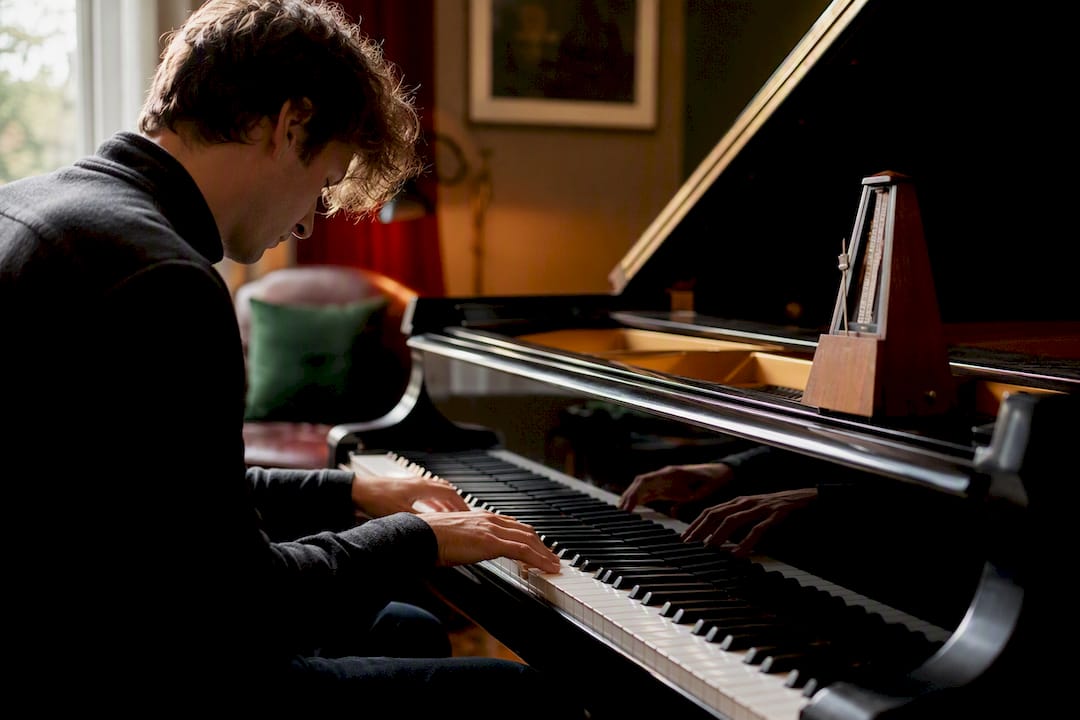
Pro Tip: If a passage still falls apart after five slow, clean repetitions, the problem usually isn’t your fingers. It’s the fingering itself. Try an alternative fingering before assuming you need more repetition.
What Dan Piano Studio teaches and one tweak that works
Dan Piano Studio has taught jazz piano, improvisation, and music theory to children and adults across Central London, Camden, and King’s Cross, alongside classical repertoire and ABRSM and Trinity exam preparation. Lessons focus on building technique, harmonic understanding, and genuine musical confidence, not just running through exercises for their own sake.
One tweak we return to often with students who plateau: a dedicated weekly transcribe-and-apply block, where a short phrase learned by ear on Monday gets deliberately worked into that week’s improvisation practice by Friday. Students who adopt this consistently report faster, more natural-sounding solos within a matter of weeks, because the vocabulary comes from real recordings rather than theory alone.
Lessons cover classical piano, jazz piano, improvisation, and music theory
Available in-person across Central London, Camden, King’s Cross, and online
Structured teaching approach built around real repertoire, not isolated drills
A teacher’s note on timelines and staying motivated
Realistic expectations help more than motivation ever will. Beginners often need three to six months before ii–V–I feels natural in a handful of keys; intermediate plateaux around comping fluency are completely normal and usually last a few weeks. If you’re stuck, a single lesson can often unstick months of solo practice faster than pushing on alone.
— Dan
How Dan Piano Studio can help you follow this routine
Building this routine alone is entirely possible, but most players get there faster with a second set of ears checking their voicings, timing, and repertoire choices. Home lessons in Central London, Camden, and King’s Cross suit younger students and anyone who learns best with an instrument in the room together. Online lessons suit working adults who need flexibility around a job and still want proper structure to their week.
A first lesson with Dan Piano Studio typically includes a full audit of your current practice habits and a custom 30-day plan built around your actual schedule and skill level, not a generic template. If you’d rather train from home with a teacher who can watch your hand position and hear your voicings in real time, book a home piano lesson. If flexibility matters more right now, start with an online piano lesson and get your custom plan built in the first session. Lesson packs are available for both formats if you know you’re in it for the long haul.
Key Takeaways
A jazz piano practice routine works when five clear blocks (warm-up, technique, repertoire, improvisation, review) are time-budgeted and rotated weekly across keys and skills.
Point | Details |
Use five fixed blocks | Warm-up, technique, repertoire/section work, improvisation/ear training, and review keep every session purposeful. |
Rotate through all 12 keys | Practise ii–V–I around the cycle of fourths since standards modulate and flat keys dominate. |
Match length to level | Beginners suit 30 minutes, intermediates 45 to 60, advanced players 90 minutes or more. |
Fix hard bars systematically | Isolate the passage, play hands separately, halve the tempo, then rebuild with the metronome. |
Get a routine audit from Dan Piano Studio | A first lesson reviews your current habits and builds a custom 30-day plan for home or online study. |
Sources
Recommended


Comments