


Exam Ready Trinity Piano Technical Work, UK Teacher Tested Weekly Plan

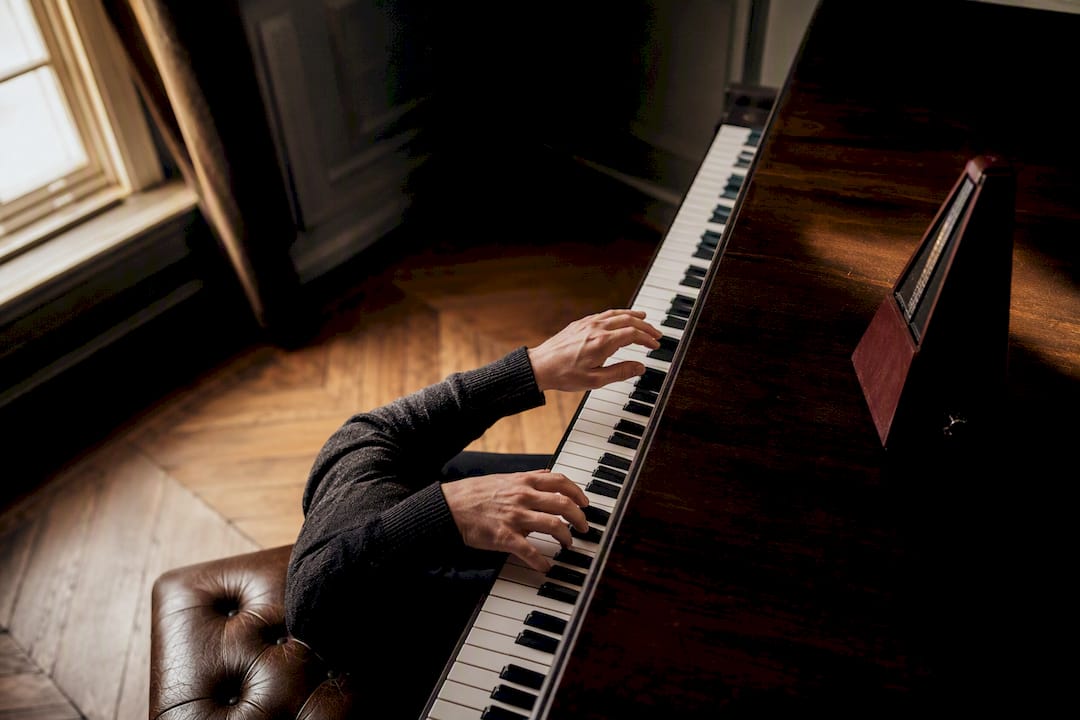
Trinity piano technical work means scales, arpeggios and three technical exercises, examined either alongside three repertoire pieces or replaced entirely if you choose four pieces instead. For Digital Grades, candidates pick a Technical Work pathway or a Repertoire-only pathway at the point of booking, and both routes follow the same face-to-face syllabus requirements. The exact scales, arpeggios and exercises for your grade are published as free PDFs on Trinity College London’s own site, not buried in a workbook you have to guess your way through.
TL;DR:
Candidates should prioritize short, frequent practice sessions, including slow scales, isolated exercises, and timed mock recordings, to develop consistent control.
Technical exercises increase in difficulty from Grade 1, with cross-hand work and extended arpeggios becoming mandatory at Grades 7 and 8.
Proper setup, clear camera angles, and uninterrupted recording are essential, as editing or skipping exercises will lower marks in Digital Grades submissions.
Trinity’s official PDFs provide detailed lists of scales, arpeggios, and exercises for each grade, which should be used to ensure accurate preparation.
Teachers recommend integrating technical work into regular lessons and conducting mock exams to improve control, musicality, and familiarity with the recording process.
Table of Contents
How do you prepare scales, arpeggios and the three technical exercises?
What’s an effective weekly practice routine for technical work?
How should technical work be ordered in a Digital Grades video?
A teacher’s perspective on preparing students for technical work
How Dan Piano Studio supports your Trinity technical work preparation
What does the technical work section actually assess?
Technical work exists because repertoire alone doesn’t prove a pianist can control their instrument under pressure. The section splits into three distinct parts, and each one tests something slightly different.
Scales and arpeggios check evenness, fluency and finger independence across keys.
Technical exercises isolate specific mechanical skills, things like voicing a melody over an accompaniment, or coordinating contrary motion between hands.
Together, they reveal whether a student’s technique will hold up when repertoire gets harder next grade.
Examiners aren’t chasing raw speed. Trinity’s own pedagogical guidance stresses that these exercises should test tone, balance, voicing, coordination and flexibility, the same qualities that separate a mechanical scale run from a musical one. A scale played evenly but lifelessly scores worse than one played slightly slower with genuine shape and dynamic control. This is also why technical work links so directly to graded theory. Understanding key signatures and interval patterns makes scale practice faster to learn and easier to retain, rather than treating it as isolated finger drill.
How do you prepare scales, arpeggios and the three technical exercises?
Each grade has its own list, but the underlying preparation logic stays consistent from Initial through Grade 8. Here’s how to approach the three components in order:
Scales and arpeggios first. Learn the required keys hands separately, then hands together at a slow, controlled tempo before attempting the grade’s target speed. Pay attention to articulation markings, most grades expect legato by default, with staccato variants introduced as a separate technical demand.
Technical exercises second. These typically fall into three categories: tone and voicing exercises (bringing out one hand over the other), coordination exercises (contrary or similar motion patterns), and strength or flexibility studies (often involving repeated notes or extended stretches). Identify which category each exercise belongs to before you start practising it blind.
Performance polish last. Once notes and fingering are secure, work on musical shaping. Examiners consistently reward exercises played with intent over ones played correctly but flatly.
Pro Tip: Treat every technical exercise as a four-bar piece with its own dynamic arc. Even a simple broken-chord study benefits from a small crescendo and a settled final note, it signals control rather than survival.
What’s an effective weekly practice routine for technical work?
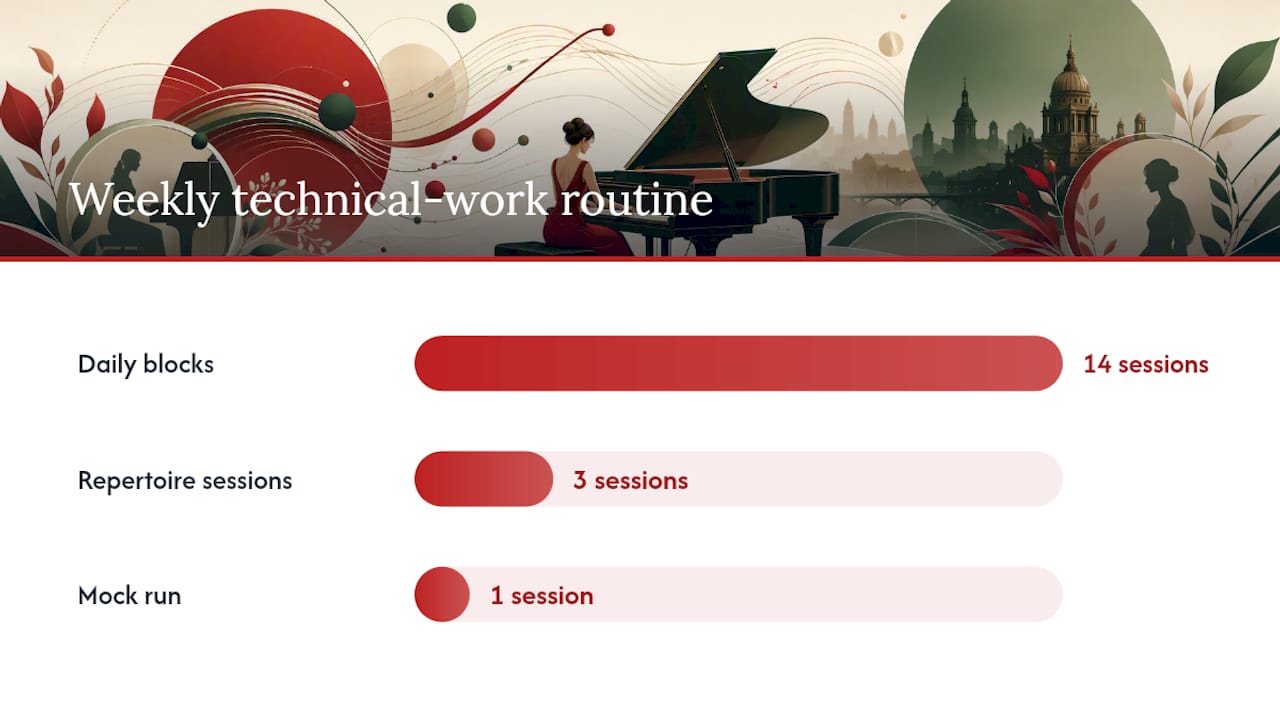
Technical work rewards short, frequent contact far more than one long weekly session. A routine that Trinity’s own resources broadly support looks like this: two brief daily technique blocks of 10 to 15 minutes each, three sessions during the week where you deliberately practise repertoire passages that share technical motifs with your scales or exercises, and one weekly mock run played straight through under timed conditions.
Within those daily blocks, a handful of practice methods do most of the work:
Slow practice with a metronome, increasing tempo only once accuracy holds for three consecutive run-throughs.
Hands separately before hands together, especially for arpeggios spanning wider stretches.
Isolating the hardest two bars and looping them, rather than always starting from the top.
Varying dynamics and articulation deliberately, so the fingers don’t lock into a single unthinking pattern.
Pro Tip: Record yourself playing a technical exercise once a week on your phone. You’ll hear unevenness in tone and rhythm that’s almost impossible to catch while you’re playing.
How do technical demands change from Initial to Grade 8?
The jump in difficulty isn’t linear, it accelerates around the middle grades. At Initial and Grade 1, expectations centre on basic hands-together coordination and simple legato scales across one octave. By Grade 4, candidates face contrary motion scales, more key signatures, and technical exercises demanding real independence between hands.
Grade 7 and Grade 8 introduce cross-hand work, extended arpeggios across four octaves, and technical exercises built around rhythmic complexity, syncopation, irregular groupings, sudden dynamic shifts within a single phrase. Trinity lists exact exercise names and sample patterns within each grade’s technical work PDF, so always check you’re using the current syllabus edition rather than an older one a sibling or former student passed down.
Initial to Grade 1: single-octave scales, basic hand coordination.
Grade 4: contrary motion, wider key range, independent-hand exercises.
Grade 7 to Grade 8: cross-hand technique, four-octave arpeggios, rhythmic complexity.
How should technical work be ordered in a Digital Grades video?
Digital Grades give candidates flexibility, but the rules aren’t loose. Once you’ve chosen the Technical Work pathway at booking, technical work can be filmed before, after, or between your repertoire pieces, provided each item is played complete and in the exact order listed for your grade. You can’t skip around or splice together a better take of a scale from a separate recording.
Confirm your pathway choice and technical work list before you start filming, not after.
Set up a single, uninterrupted camera angle showing hands and keyboard clearly, with the microphone close enough to catch dynamic nuance without distortion.
Record technical items as one continuous take. Cutting or editing between exercises is a common reason submissions get marked down.
Label files clearly with candidate name and grade, and double check the repertoire list matches what you actually booked.
Rehearsing with the camera and microphone running beforehand catches most of these problems before they cost you marks.
Where can you find official Trinity resources and books?
Trinity publishes everything you need directly, no need to rely on secondhand summaries. Start with the grade-specific technical work PDFs, which list every required scale, arpeggio and exercise by grade.
The core book for lower grades is Piano Scales & Arpeggios from 2015, Initial–Grade 5, available through Trinity’s own shop.
A separate Grades 6–8 edition is stocked at Presto Music for UK buyers.
Trinity refreshed several repertoire books and technical exercises with its 2023 syllabus, so always check you’re buying the current edition rather than an older print run.
A teacher’s perspective on preparing students for technical work
Technical work often gets dedicated time in most lessons rather than being squeezed in at the end. Students run mock exams with a metronome set to the grade’s target tempo, then again slightly under tempo to test control rather than adrenaline.
For Digital Grades specifically, mock recording sessions matter more than most students expect. Filming a full take, watching it back together, and picking apart camera angle, audio clarity and continuity catches problems weeks before the real submission, not the night before. Formal case studies and specific student outcomes from these sessions will be added here as they’re documented.
— Dan
How Dan Piano Studio supports your Trinity technical work preparation
Working through scale patterns from a PDF is one thing. Having someone catch the uneven thumb-under in your G major arpeggio before it becomes a habit is another. Technical work coaching is built into lesson packages rather than treated as an afterthought squeezed in before an exam date, covering the full spread from Initial through Grade 8.
Lessons run as home visits across Central London, Camden and King’s Cross, or as online sessions for students who’d rather work from their own piano, which suits Digital Grades preparation particularly well since you can rehearse your actual recording setup with a teacher watching the same feed you’ll submit. Mock exams, recording run-throughs and targeted technical drilling all sit inside the standard lesson structure. For more on how examiners score performances once you’re in the exam itself, Dan’s breakdown of Trinity’s marking criteria is worth reading alongside your technical work list. If you’re ready to get a second pair of ears on your scales, book a home visit or an online slot and bring your current grade’s technical work list to the first session.
Sources
FAQ
Is Trinity internationally recognised?
Yes. Trinity College London qualifications are recognised by conservatoires, schools and UCAS in the UK, and Trinity examines in over 60 countries worldwide.
Which is harder, ABRSM or Trinity?
Neither board is objectively harder overall, they weight skills differently. Trinity’s technical work often allows more exercise variety per grade, while ABRSM leans more heavily on scale speed and traditional repertoire depth.
What is the highest Trinity piano grade?
Grade 8 is the highest graded piano exam. Beyond that, Trinity offers diploma qualifications such as ATCL and LTCL for advanced performers and teachers.
Can you do LTCL without ATCL?
Yes, ATCL is not a formal prerequisite for LTCL, though most candidates build up through the lower diploma first since the technical and musical demands increase sharply between the two.
Do I have to choose the Technical Work pathway for Digital Grades?
No. Trinity’s Digital Grades let you choose the Repertoire-only pathway instead, submitting four pieces with no separate technical work section, though this choice must be made at booking and can’t be changed afterwards.
Recommended


Comments